

Description
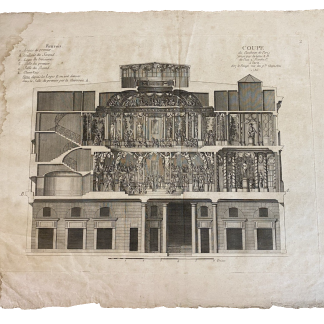
We are pleased to offer an exceptional 1786 architectural etching by the esteemed French cartographer and engraver, Georges-Louis Le Rouge (1712-1790). This masterful print presents both the elevation and sectional views of the Panthéon in Paris, originally constructed as the Church of Sainte-Geneviève. The etching provides a detailed depiction of the Panthéon’s neoclassical design, capturing the grandeur and intricate architectural elements envisioned by Jacques-Germain Soufflot, the building’s principal architect.
Dimensions:
*
Approximate Overall Size: 24 inches (height) x 18 inches (width) (60.96 cm x 45.72 cm)
This substantial size allows for an immersive and detailed presentation of the Panthéon’s architectural intricacies.
Key Points Highlighting the Rarity and Historical Significance:
*
Historical Context: Created in 1786, this etching dates to a pivotal era in French history, just before the French Revolution. It captures the Panthéon during its transformation from a church into a secular mausoleum, reflecting the shifting cultural and political landscape of the time.
*
Artistic Excellence: Georges-Louis Le Rouge was a prominent figure in 18th-century French engraving, known for his detailed and accurate representations of architectural subjects. His works are highly sought after by collectors and institutions alike.
*
Rarity: Original 18th-century architectural etchings, especially those depicting iconic structures like the Panthéon, are exceedingly rare. The survival of such a piece in good condition is uncommon, making it a valuable addition to any collection.
*
Provenance: Published by Chez Le Rouge, located on Rue des Grands Augustins in Paris, this etching originates from a notable establishment known for producing high-quality prints during the 18th century.
*
Cultural Significance: The Panthéon stands as a symbol of French heritage and intellectual achievement, housing the remains of distinguished citizens such as Voltaire, Rousseau, and Victor Hugo. This etching offers a glimpse into the architectural grandeur of this revered monument during its inception.
This etching represents a unique opportunity for collectors, historians, and enthusiasts of architectural art to own a piece of 18th-century French history. Its combination of artistic merit, historical context, and rarity ensures its place as a treasured artifact in any esteemed collection.